

From the bay to the ocean
The relationship between Guanabara Bay and Rio de Janeiro is ancient: from Tupinambá myths to the arrival of the first Portuguese expedition, the forced landing of African peoples in the surrounding ports, and more recently, the changes in the Porto Maravilha region, the bay has become the guiding thread of the city's greatest transformations.
This relationship is also reflected in the dynamics between the bay and the Atlantic Ocean, which has opposing sides: initially a vital cradle for various oceanic species in search of nutrients, this link is put at risk due to the degree of water pollution.
Reflecting on the intersections between artistic practices and climate emergencies, the Museu do Amanhã, in partnership with the Boticário Group Foundation for Nature Protection, hosted the works of five artists. Camila Proto, Chris Tigra, iahra, Lucas Ururahy, and Ygor Gama draw on their research to question the relationships between nature and culture, the individual and the collective, the human and the more-than-human.
By combining science and fiction in their investigations, the group reminds us that one can only study what one has first dreamed of. It is by nurturing the imaginative forces of the public that the Museum of Tomorrow bets on the potential for reconnecting humanity with the ocean, basing its defense on the recovery of the memory that connects us.
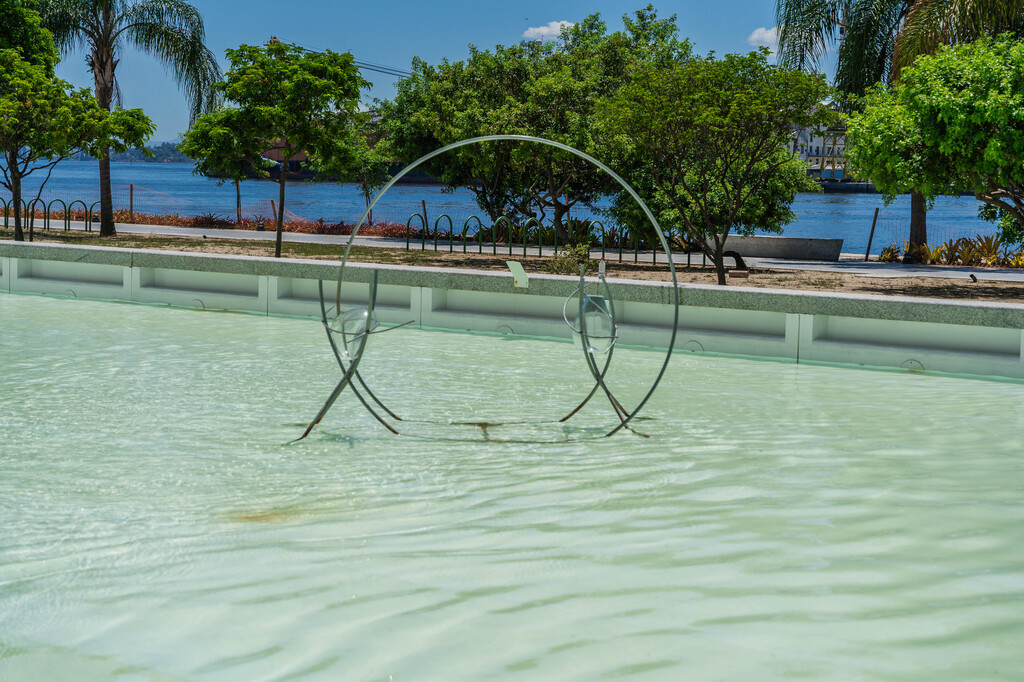
Tides, from the capsule-cocoon series, 2025
Credits: Mixel Sevla
Welded iron, glass, and fresh water
In the capsule-cocoon series, iahra conducts an investigative process on the river courses that form Rio de Janeiro, seeking to highlight an underground hydrographic body, often polluted by human activity, to discuss dynamics of biological and poetic survival and death. Starting from the Metropolitan Region, her place of origin and where she now lives and works, the work Marés (Tides), commissioned by the Museum of Tomorrow, begins with the collection of water from two rivers that flow into Guanabara Bay: the Jacaré, which originates in the Morro do Elefante and cuts through the favela of the same name, and the Faria-Timbó, which originates near Inhaúma. Samples from both are then encapsulated in glass jars and positioned in twisted iron structures to, soon after, be moved and follow a new geographical path from the destination of her sculptures; here located in the reflecting pools of the Museum. The liquids continue to follow their paths throughout the exhibition period, through the evaporation cycles resulting from contact with the climate, providing other directions and encounters for a living body that intertwines with the Rio de Janeiro region and gives its name to the state.
The relationship between movement and form is also evident in the circular and tangled order of the contorted iron rods that support the glass capsules. Derived from an investigation stemming from experiments with drawing and the body in space, the work finds echoes in the writings of the English painter William Hogarth (1697–1764) and the German writer Goethe (1749–1832), who produced aesthetic reflections linking curvilinear and serpentine patterns to a principle of beauty and grace. For the latter, the spiral was understood as a natural tendency, found in flora, dealing with that which “perfects itself, reproduces itself and, as such, is ephemeral.” This connection, although highly debatable in light of contemporary scientific postulates, is freely and poetically recovered by iahra, who seeks, in the tensioning of rigid and resistant objects, such as iron rebars, the production of a seductive, organic, and choreographic form. Approximated to fragile and malleable elements, such as glass, the material dichotomy establishes a balance between stability and uncertainty, moving, moreover, towards metamorphosis, as is the case with the vectors that circumscribe the movements of the contained waters.
By highlighting and reflecting on the cycles related to tidal flows, the relationships between the transit of bodies and their reflections in the water, and the intertwining of forces between body and space, iahra proposes new ethical and sensory connections with the more-than-human world. By creating tension between balance, gravity, movement, and form, Marés makes visible the physical-chemical forces that govern terrestrial bodies, allowing visitors to follow, day by day, the changes in its living sculpture. Here, quoting the philosopher Leda Maria Martins, a time is established that is “ontologically experienced as contiguous and simultaneous movements of retroaction, prospection and reversibilities, dilation, expansion and containment, contraction and relaxation, synchronicity of instances composed of present, past and future” (MARTINS, 2021).
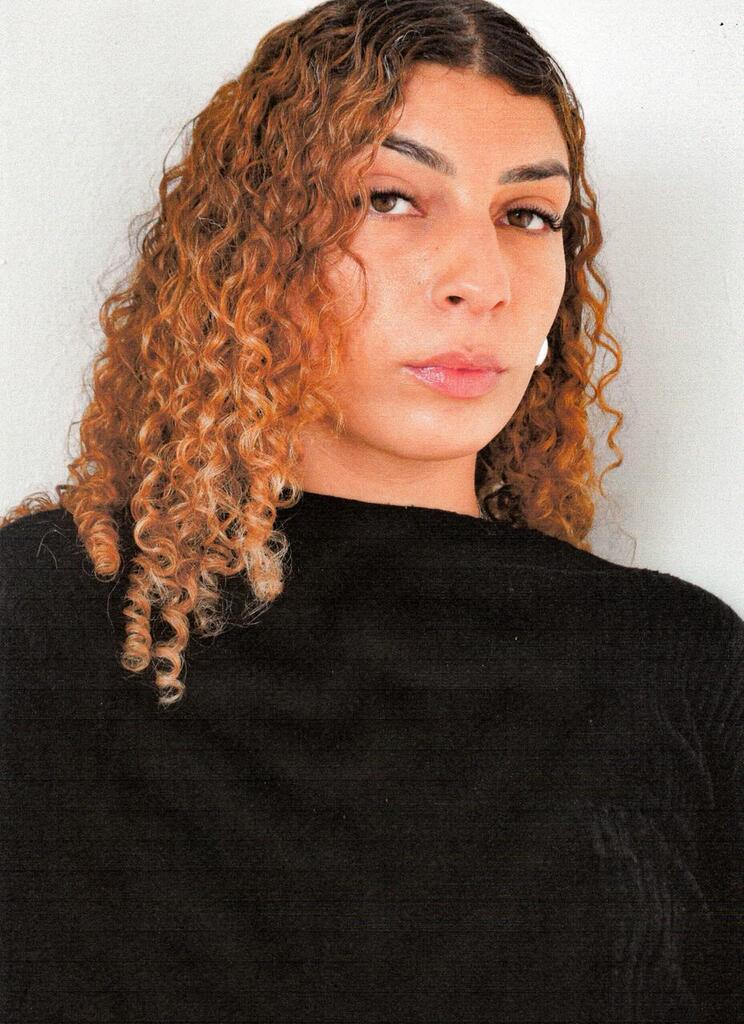
iahra
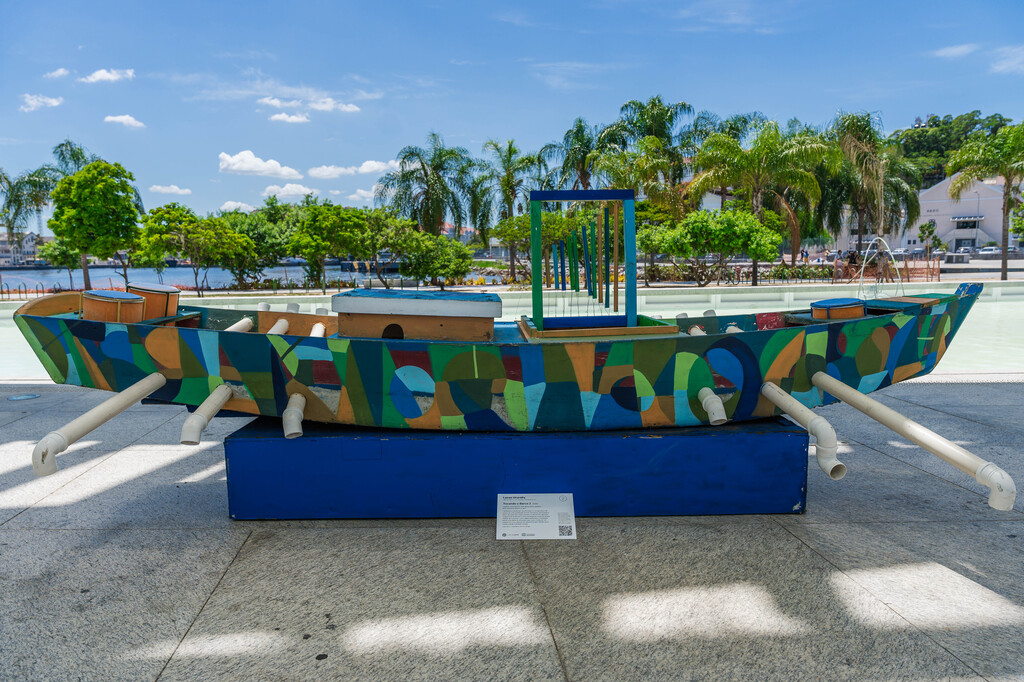
Keeping the Boat Going 2, 2025
Credits: Mixel Sevla
Wood, acrylic paint, spray paint on wood, PVC, aluminum, plastic and steel.
Drums and tubophones transform a fishing boat into an interactive sound installation in Playing the Boat 2. The boat exchanges the waters for the streets and weaves the wisdom of the seas into urban culture through the creation of a sensory environment. Constructed from repurposed materials and nautical elements, the piece takes on the forms and colors of the artist's visual research, which fuses the language and colors of graffiti with the symbolic shifts of contemporary art.
Although functioning as an autonomous object, the installation includes a series of activations aimed at establishing a space for cultural exchange: in gatherings that bring together musicians, poets, and visual artists, Tocando o barco 2 takes the form of a jam session, where musical rhythms such as jazz, rap, spoken word poetry, Rio funk, samba, and everyday sounds merge. In “rituals of invention,” the encounters unite sound, word, and body, promoting attention, listening, and collaborative creation—guiding principles of the practice of fishing as a sensory experience. By bringing together the languages of painting, poetry, and music, Ururahy pursues the construction of a synesthetic, polysemic, and democratic work.
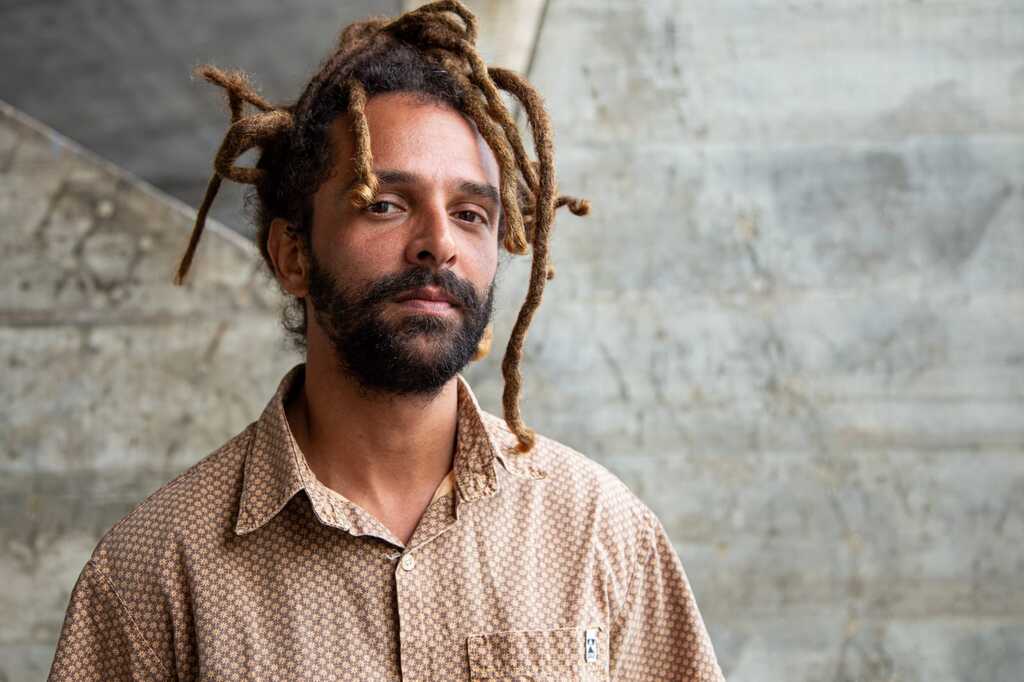
Lucas Ururahy
In search of a miracle, 2025
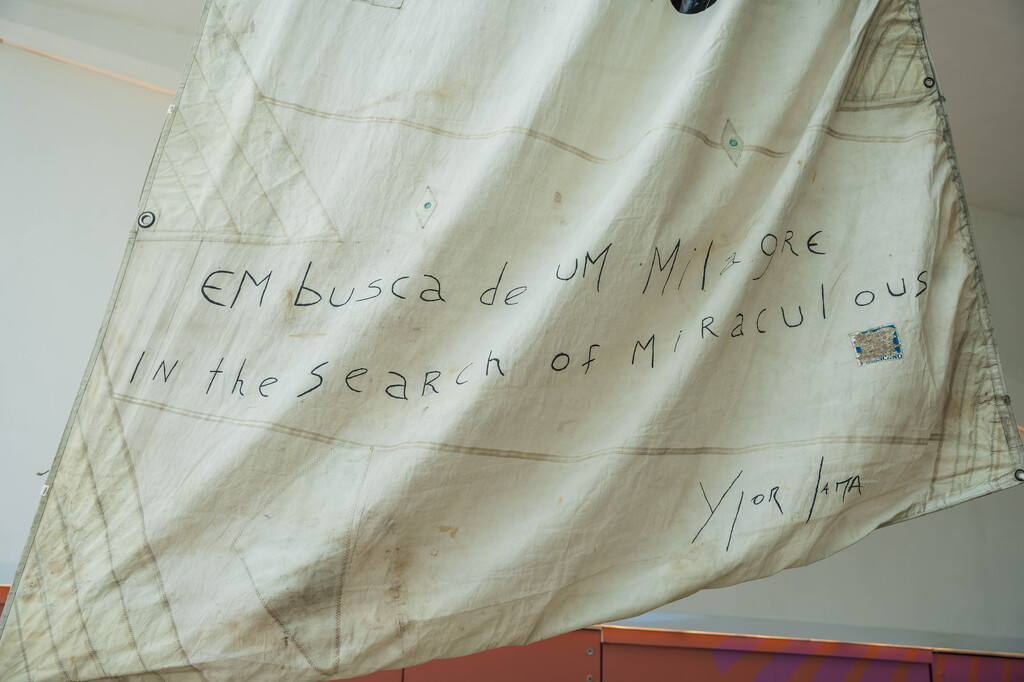
Credits: Mixel Sevla
360° video performance (17’), virtual reality glasses, dacron boat sail, benches
A small vessel reveals the ocean of Rio de Janeiro in "In Search of a Miracle," an augmented reality video performance by artist Ygor Gama. The maritime wandering revisits the end of the life of the renowned performance artist Bas Jan Ader (1942–1975), particularly the episode in 1975 when the Dutchman decided to set sail from Massachusetts to London and then to the Netherlands. The crossing—of the same title as the work commissioned by Ygor Gama—would have made it the smallest sailboat to cross the Atlantic at the time, had its mission been successful. Although his boat was recovered ten months later by another vessel, his body was never found.
Ader's romantic and dreamy impulse is reincarnated by Ygor, who, over the course of months, set out to learn to swim – a lack of skill turned into a fear after a traumatic event in a maritime accident – as a way to foster connections with the knowledge and economies that orbit the waters of Rio de Janeiro. Conversations with scientists, oceanographers, geographers, boatmen, sailors, and divers precede the experience of the presented video, in which the artist departs from the Guanabara Bay region towards the Cagarras Islands, where a body adrift at sea merges with the local landscape as it navigates the ebb and flow of the currents.
If floating in deep waters alludes to the artist's own activity, whose body must submit to the changes of the waves without sinking, the act also proposes a reflection on humanity's collective struggle against one of the main symptoms of global warming: rising sea levels – which, in specific points of the globe, already exceed fifteen centimeters of increase, jeopardizing existence on land. Amidst the delicate balance of the scene, the memory of those who succumbed in the past and those who resist today in contact with the ocean, the right to dream becomes the poetic engine that intertwines the works of the artist from Pernambuco and the Dutchman.
Executive Production: Lorena Pazzanese; Assistance: Alan Athayde; Technical Production (Virtual Reality): Matheus Mendes; Sailor: Valdécio Cézar da Silva (Master César)
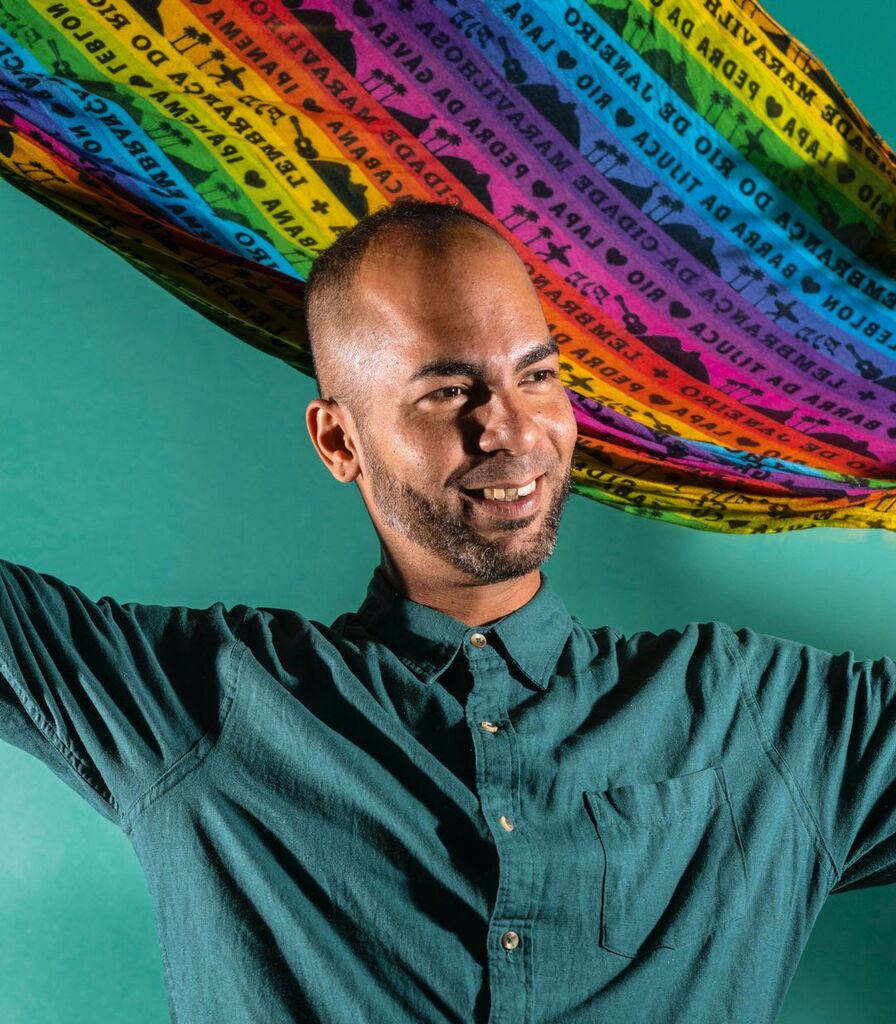
Ygor Gama
Present, from the series "From the stories of the sea I have lived", 2025
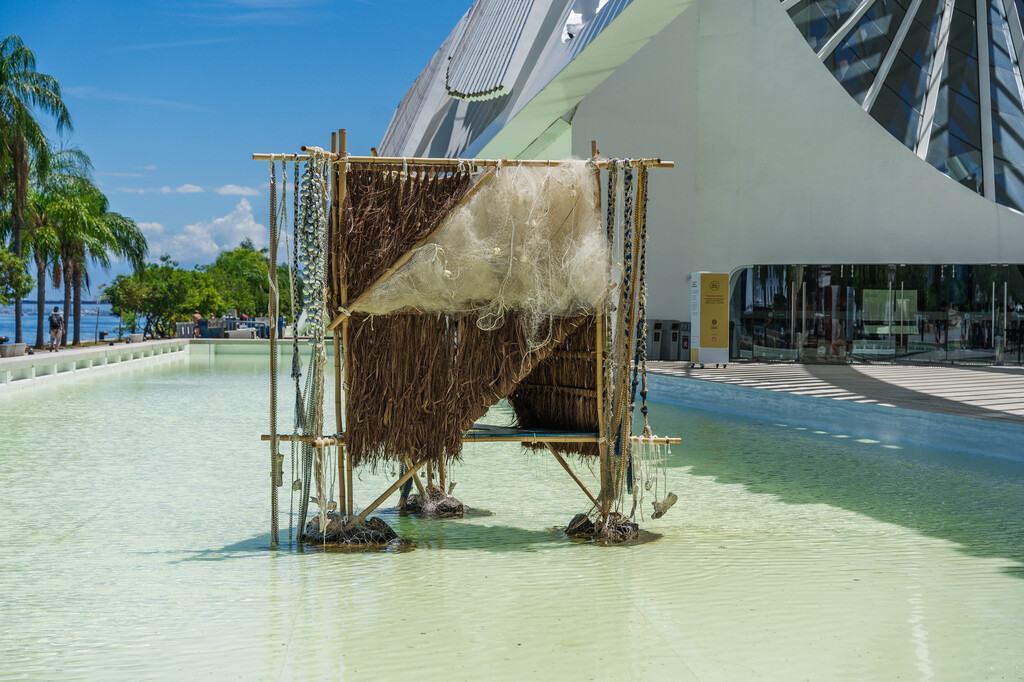
Credits: Mixel Sevla
Fiber from Attalea funifera, bamboo, aluminum cans, reclaimed urban stones, calcified bones, fragments, ropes, and fishing nets collected from the sea.
"Present" is an installation positioned in the reflecting pool of the Museu do Amanhã, conceived by Chris Tigra as a space installed next to the Atlantic Ocean, in devotion to the waters and the African ancestors who arrived here, in this region, via the transatlantic route. The artist emphasizes the cult of memory as a sentiment that celebrates the advanced ancestral and contemporary technologies of the culture with which she has had contact throughout her career. The work, guided by the gesture of her hands, features bindings, braids, trinkets, and hand embroidery.
The installation's form is crafted using natural fibers and fragments found in the waters, an event the artist interprets as a gift from the deity Yemanjá, queen of the waters in Yoruba and Afro-diasporic cultures. The work is complemented by fishing nets donated by fishermen and shellfish gatherers from small communities in Bahia and Rio de Janeiro: “These are fishing nets that have already touched fish and storms until they wore out over time, sustaining families who still maintain traditional practices in harmony with the nature of the tides,” explains the artist, adding: “I used different hand-weaving techniques to give new meaning to the material, working with the energy of presence, offering, and protection.” Finally, the clever use of recycled aluminum cans was applied to embroidered trinkets, as well as small sculptures of calcified bones collected at the seashore, both offered by Tigra as sound instruments for the one who commands the winds.
Creative consulting and technical support: Felipe Bardy (RJ); Embroidery collaboration with tin can rings: Rejane Aleixo (PE); Assistance: Rose Ianareli (MG)
Donation of used fishing nets: Fishing Colony Z 01 (BA) and Marulho (RJ), fishermen and shellfish gatherers from independent communities on Itaparica Island (BA).
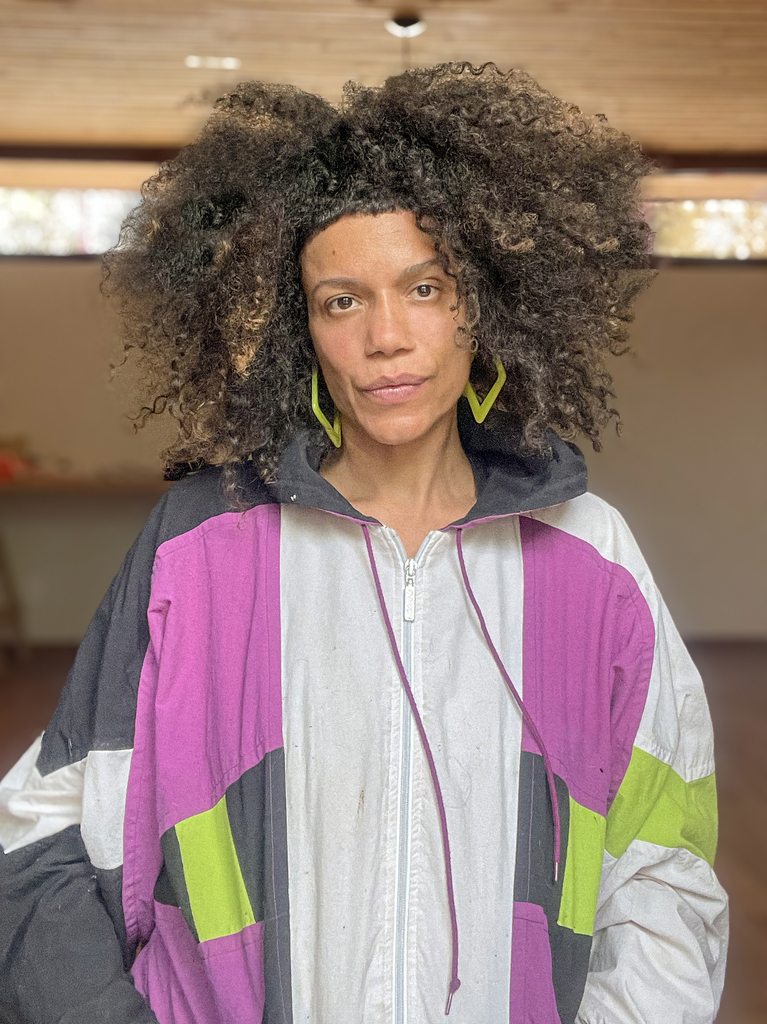
Chris Tigra
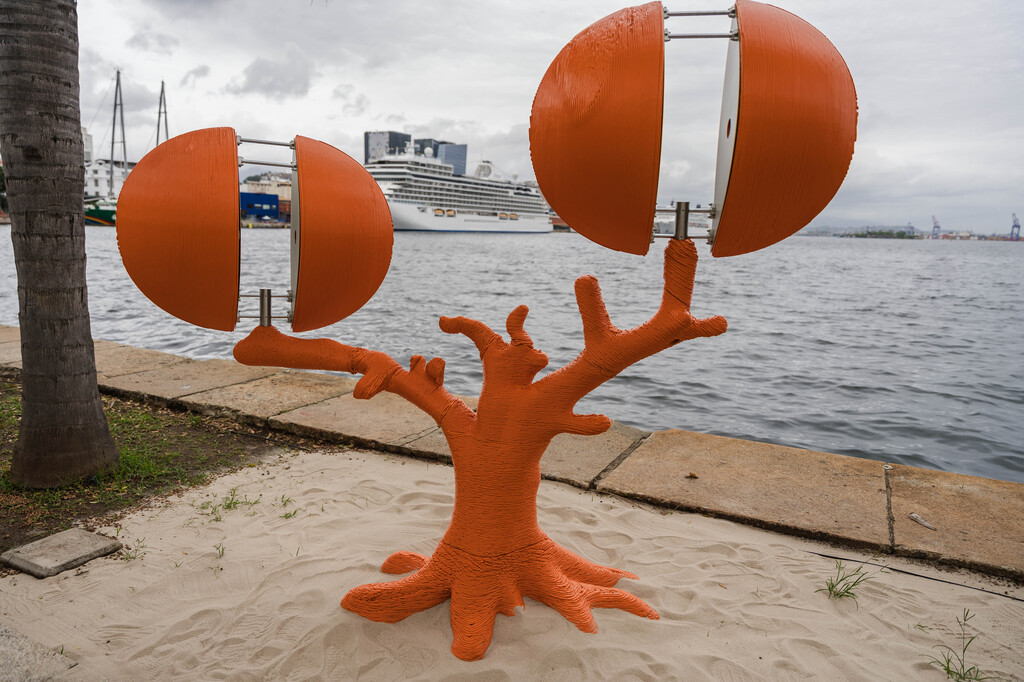
Guanabara Listening Room, 2025
Credits: Mixel Sevla
3D printing in ABS seaweed and galvanized steel
What happens on the shores of a marine ecosystem continuously silenced by the intense noise of a coastal city? Starting from this question, the artist Camila Proto developed the sculpture Escutatório da Guanabara (Guanabara Listening Room), an object composed of two sound focalizers that reverberate the sounds of Guanabara Bay, on the edge of the Museum of Tomorrow. Inspired by the acoustic defense technologies invented during the early 20th century, driven by the technological and military advances brought about by the First World War, the artist reimagines the tool, proposing, through the exercise of listening, not measurement, but fabulation: by listening to the sounds of boats anchoring on the coast, birds flying over the waters, and aquatic beings rising to the surface, the visitor is invited to hear the symphony of intertwined life – and even to imagine sounds from even more distant times and spaces.
The act of listening triggers stories surrounding the bay, such as the popularly famous tale of a "sleeping giant" resting atop the waters of Rio de Janeiro; the stories, knowledge, and rituals of the indigenous people who populated the bay; those who inhabit the marine ecosystems; and an entire imaginary of an aquatic body, activating the memory of the waters. In the sweep through the sonic fluctuations that extends the auditory field from the banks of Porto Maravilha to the Rio-Niterói Bridge, the public promenade of the Museum of Tomorrow becomes a generative space for research focused on speculative listening. The public is invited to adopt an investigative, almost scientific, stance towards the sonic encounters combined with individual memories.
Produced in a shell made of seaweed, the urban furniture proposes the extension of the sense of hearing through the encounter between species. In this sense, just as seaweed functions in the aquatic ecosystem – namely, the absorption of inorganic compounds, bioadsorption, which removes toxic metals from the water, and oxygenation, which returns oxygen – the "Escutatório" (listening unit) acts as a sensitive filter, capable of removing the listener from the noise of the metropolis to pay attention to the aquatic body in its complexity and mystery. In contrast to sound measurement technologies used by the military, where form adapts to function, the body of the Guanabara "Escutatório" acquires, in this symbiosis, an organic and rhizomatic form, growing slenderly towards human size.
Camila Proto
***
Text When the Sea Inspires Matter, written by Algaes4y
This sculpture was born from the encounter between the primal force of algae, transformed by Algaes4y into Algaplastic®, and the poetic research of Camila Proto, who gave form to the invisible.
The algae used are ancient organisms of enormous power: they grow using the sun's energy, purify the oceans, and capture carbon in their biomass, carrying a history that predates humanity.
Algaplastic® is a rare, world-first biopolymer produced entirely from Kappaphycus alvarezii. Its material incorporates carbon fixed in the ocean and converts it into presence, texture, and form – uniting science, engineering, and environmental regeneration.
In this work, the biomass that once danced with the tides becomes an acoustic and participatory device, allowing the public to pay attention to what sounds on the shores of this ecosystem. Here, Guanabara Bay – continuously silenced by the volume of the city – is heard through the very organism that purifies it. 3D printed with Algaplastic®, the Guanabara Listening Room (2025) demonstrates how technique and sensitivity coexist in the same material, revealing other layers of listening and narrative.
This is an invitation to listen to the ancestral sounds of the bay, its mythical, geological and ecological background – a listening platform made of algae to hear what echoes from even before the noise of the city: the beyond-soundscape of Guanabara Bay.
PARTNERSHIP
Conexão Oceano (Ocean Connection) is an initiative of the Boticário Group Foundation, created in 2019 and aligned with the Ocean Decade. Its mission is to stimulate communication about the importance of marine and coastal conservation, connecting diverse audiences and promoting ocean culture. One of the movement's main achievements is the Conexão Oceano Environmental Communication Grant, an award-winning initiative that values and supports the production of high-quality content on ocean sustainability. Each edition of the grant offers scholarships for reporting on different themes, such as the relationship between the sea and climate change or with sports practices in coastal environments. The fifth edition, in 2025, innovates by focusing on the relationship between ocean conservation and art, with the cooperation of UNESCO and the Museum of Tomorrow. In the year of COP30 in Brazil, this edition seeks to use the potential of artistic expressions to connect and sensitize society to the environmental cause, reinforcing the direct connection between climate and ocean.