Ocean
ExhibitionEvent
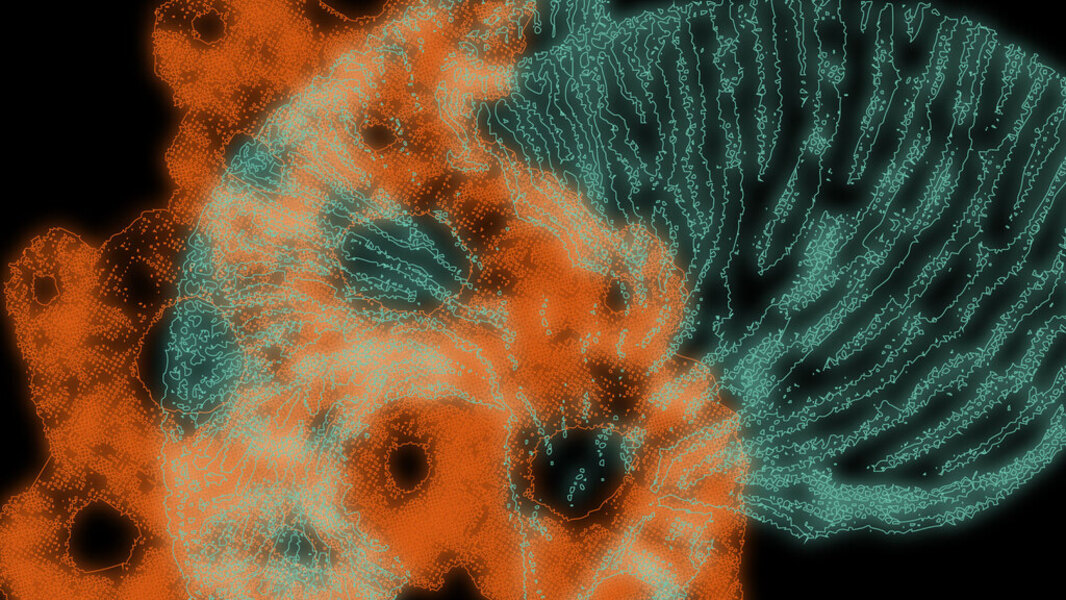
Name
Ocean
Oceano
Additional Name
the world is an archipelago
o mundo é um arquipélago
Description
The exhibition is structured around the themes of memory, attention, and anticipation, proposing a dialogue between human intelligence and oceanic intelligence.
A exposição se ergue em torno dos eixos memória, atenção e antecipação, propondo um diálogo entre a inteligência humana e a inteligência oceânica.
PLace
Temporary Exhibition
Partner(s)
Repsol Sinopec
Fundação Grupo Boticário de Proteção à Natureza
Tickets
https://site.bileto.sympla.com.br/museudoamanha/
Text
The exhibition “Ocean – The World is an Archipelago” stems from a fundamental premise: that life, in all its forms, is intelligent and that this intelligence is also manifested in the ocean depths. The exhibition revisits the ocean as our origin, recovering memories that connect us to the moment when the first organisms transformed the planet and produced the air we breathe. An invitation to experience this ancestry through sensory environments that simulate the light, texture, and movement of the waters. The exhibition unfolds around the themes of "Memory," "Attention," and "Anticipation," aligned with UNESCO's "Seven Principles of Ocean Literacy," which affirm the existence of a single global ocean and its decisive influence on climate, the proliferation of life on Earth, and the diversity of ecosystems. These principles take shape in the exhibition rooms: in "Dive," the public begins the journey in an environment that seeks to activate memories of origin and immersion. The room is almost entirely dark, with light and images of the water coming from above, to give the sensation of being underwater. In “Life,” the public encounters everything from microscopic organisms to giant species, such as the seven-meter-long orca skeleton—donated for the exhibition by the National Museum—suspended in the main hall accompanied by mapped projections of the species; in “Edge,” the ocean is presented in a structure on the ceiling of the room as an attentive system, sensitive to human pressures, whose responses—such as the rise in sea level—reveal its intelligence and ecological agency. The journey culminates in “Archipelago” and “Shipwreck,” spaces that articulate art, science, and imagination to discuss the relationship between humanity and the ocean. While Archipelago brings together contemporary works that explore the cultural, symbolic, and affective connections with the sea—understood as a “waterway that unites us” on a planetary scale—Shipwreck presents an environment of instability in which words emerge and disappear in the foam projected onto the floor, representing collective behaviors that we need to abandon to build more sustainable futures. The installation “Crossing, a collective effort” concludes the circuit with the metaphor that navigating other futures is a necessarily shared gesture. The exhibition “Ocean – The World is an Archipelago” is curated by Fabio Scarano. Camila Oliveira and Caetana Lara Resende. To help you visit the exhibition, click on the PDF below
A exposição “Oceano – O Mundo é um Arquipélago” nasce de uma premissa fundamental: a de que a vida, em todas as suas formas, é inteligente e que essa inteligência se manifesta também nas profundezas marinhas. A mostra revisita o oceano como nossa origem, recuperando memórias que nos conectam ao momento em que os primeiros organismos transformaram o planeta e produziram o ar que respiramos. Um convite a experimentar essa ancestralidade por meio de ambientes sensoriais que simulam luz, textura e movimento das águas. A mostra se desenvolve a partir dos eixos “Memória”, “Atenção” e “Antecipação”, alinhados aos “Sete Princípios da Cultura Oceânica” da UNESCO, que afirmam a existência de um único oceano global até sua influência decisiva no clima, na proliferação de vida da Terra e na diversidade de ecossistemas. Esses princípios tomam forma nas salas expositivas: em “Mergulho”, o público inicia a jornada em um ambiente que busca ativar as memórias de origem e imersão. A sala é quase toda escura, com luz e imagem das águas vinda do alto, para dar a sensação de se estar embaixo d’água. Já em “Vida”, o público encontra desde organismos microscópicos até espécies gigantes, como o esqueleto de orca de sete metros - cedido à exposição pelo Museu Nacional -, suspenso no salão principal acompanhado por projeções mapeadas da espécie; em “Borda”, o oceano é apresentado em estrutura no teto da sala como um sistema atento, sensível às pressões humanas, cujas respostas — como a elevação do nível do mar — revelam sua inteligência e agência ecológica. O percurso culmina em “Arquipélago” e “Naufrágio”, espaços que articulam arte, ciência e imaginação para discutir a relação entre a humanidade e o oceano. Enquanto Arquipélago reúne obras contemporâneas que exploram as conexões culturais, simbólicas e afetivas com o mar — entendido como “hidrovia que nos une” em escala planetária —, Naufrágio apresenta um ambiente de instabilidade em que palavras emergem e desaparecem na espuma projetada sobre o piso, representando comportamentos coletivos que precisamos abandonar para construirmos futuros mais sustentáveis. A instalação “Travessia, esforço coletivo” encerra o circuito com a metáfora de que navegar por outros futuros é um gesto necessariamente compartilhado. A exposição “Oceano – O Mundo é um Arquipélago” tem curadoria de Fabio Scarano, Camila Oliveira e Caetana Lara Resende. Para auxiliar na visita à exposição, clique no PDF abaixo
thumbnailUrl
https://museu-do-amanha.s3.sa-east-1.amazonaws.com/84e0bf31363138f38acaec2c0ad35627.jpeg
Initial Date
2025-12-17
End Date
2026-05-19
Classification
All ages
Accessbility
Audio description
Pounds