

In dialogue with the Ocean exhibition at the Museu do Amanhã, we invited the artist PV Dias to the first Open Laboratory. An Amazonian and doctoral candidate in Social Sciences (UFRRJ), PV works with historical archives to create critical fabulations and erasures of narratives in colonized territories.
In this work by PV, the notion of "whisper" (a term of Bantu origin), curated by Ana Paula Rocha, Janaína Damaceno, and Paulo Costa in relation to PV's work, is defined by Nei Lopes as a survival technology of enslaved and dissident bodies. This process that PV proposes with the workshop reorients the act of recounting the archive: displacing what has been fixed in collective memory, activating what has been silenced, producing other readings of the visible.
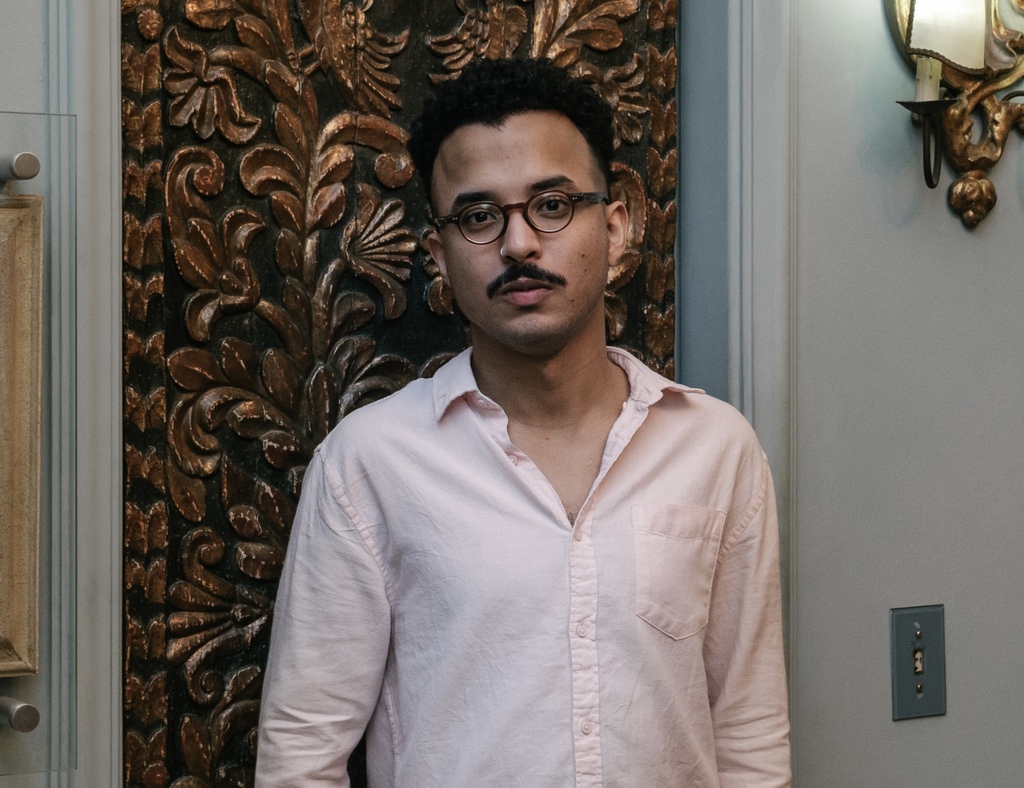
Pv Dias
The incursions of colonization and the modernization of maritime traffic also left significant marks on the Guanabara Bay ecosystem. Studies have linked the noise of ships, intensified throughout the 19th century, to the stress on the dolphin population that lived in the region. These animals, which communicate through a complex system of underwater sounds, began to "scream" more to communicate, resulting in stress in the marine population and being a symbolic factor in the decline of the Guiana dolphin (Sotalia guianensis) in the Guanabara Bay region.
Between memory, attention, and anticipation, PV proposes a practice that transforms urban affections and repertoires into images: an exercise in bringing together coastlines, capable of uniting landscapes and broadening horizons. Creating, in the dynamics of the workshop with the participants, visualities that have an impact.