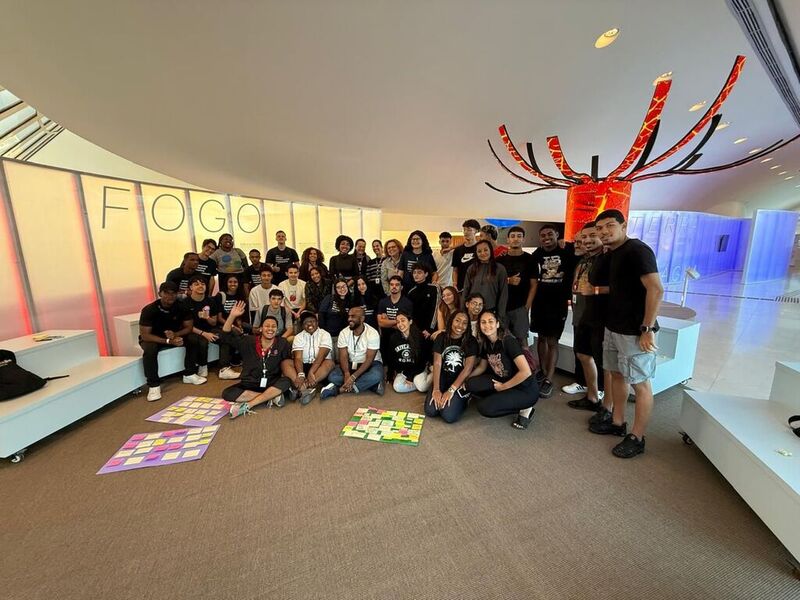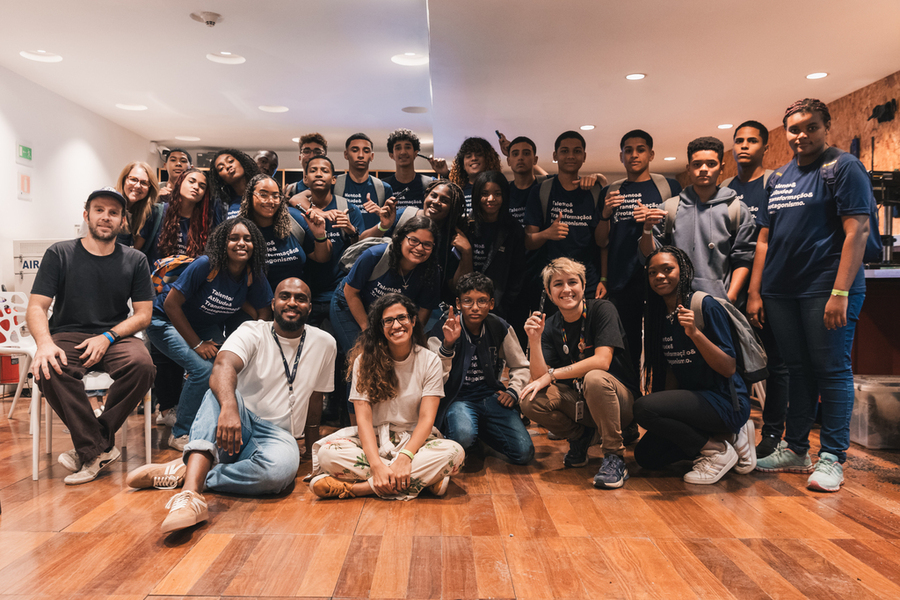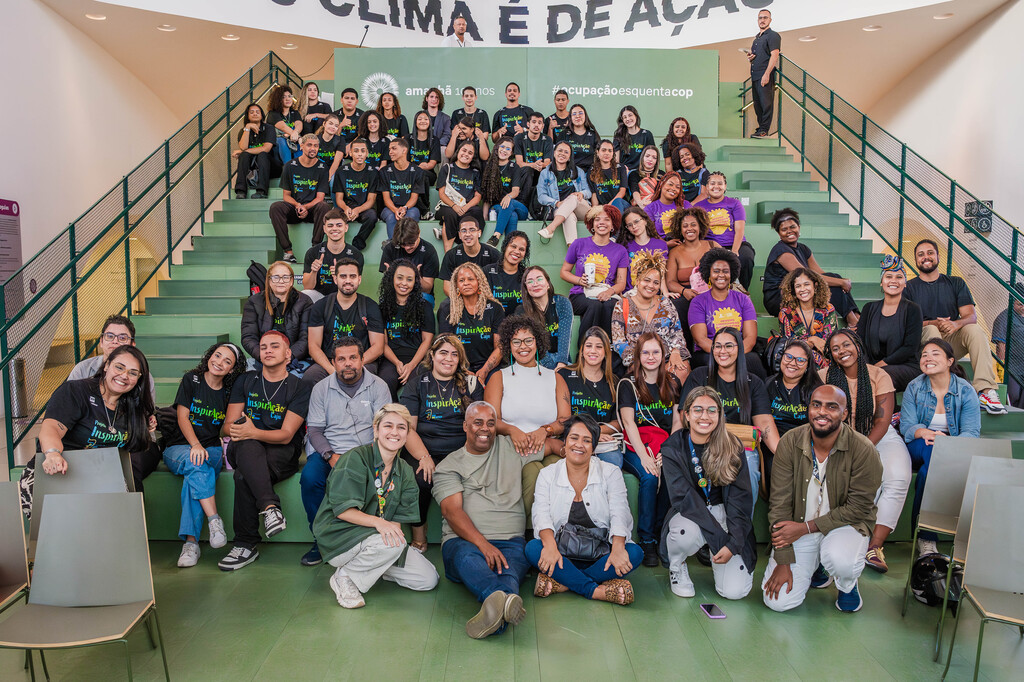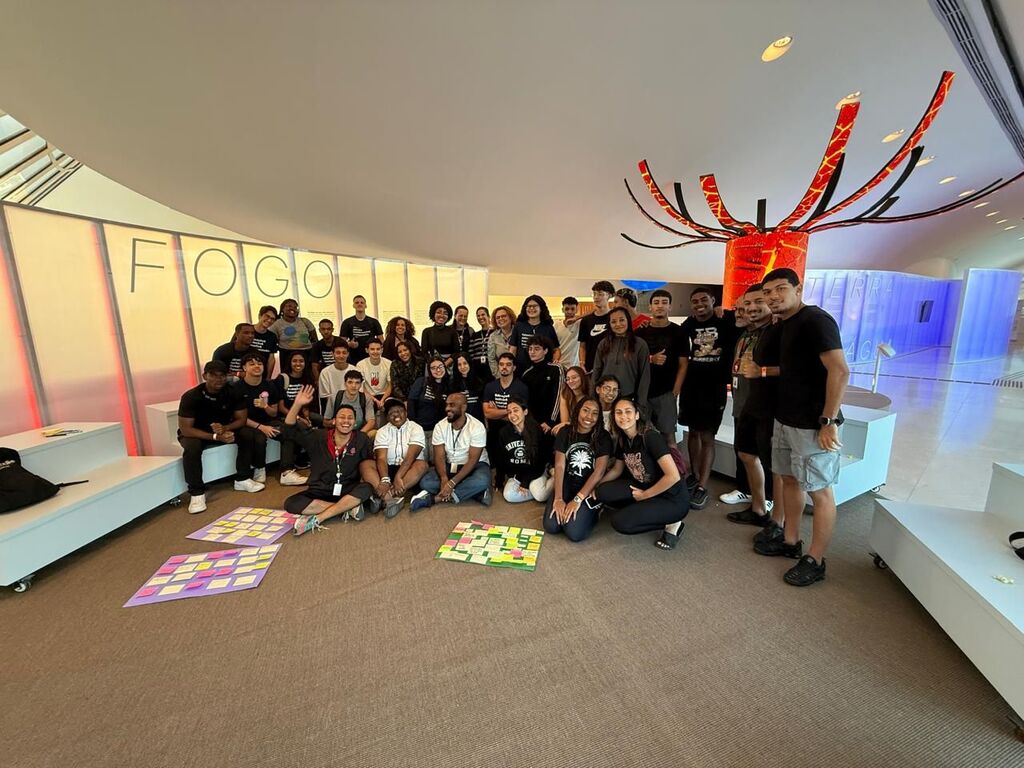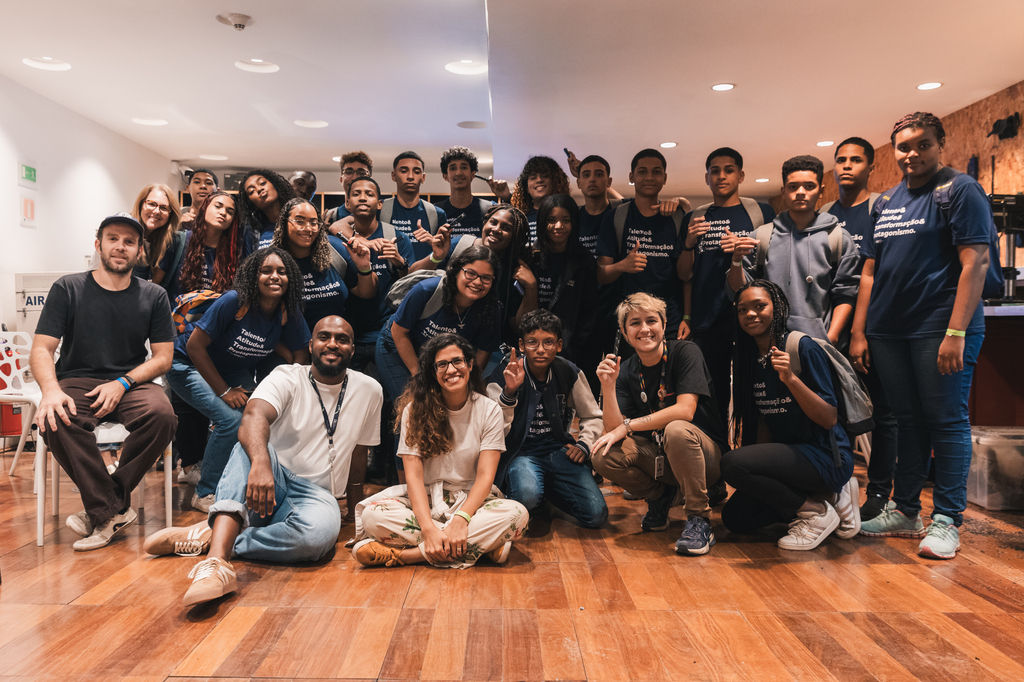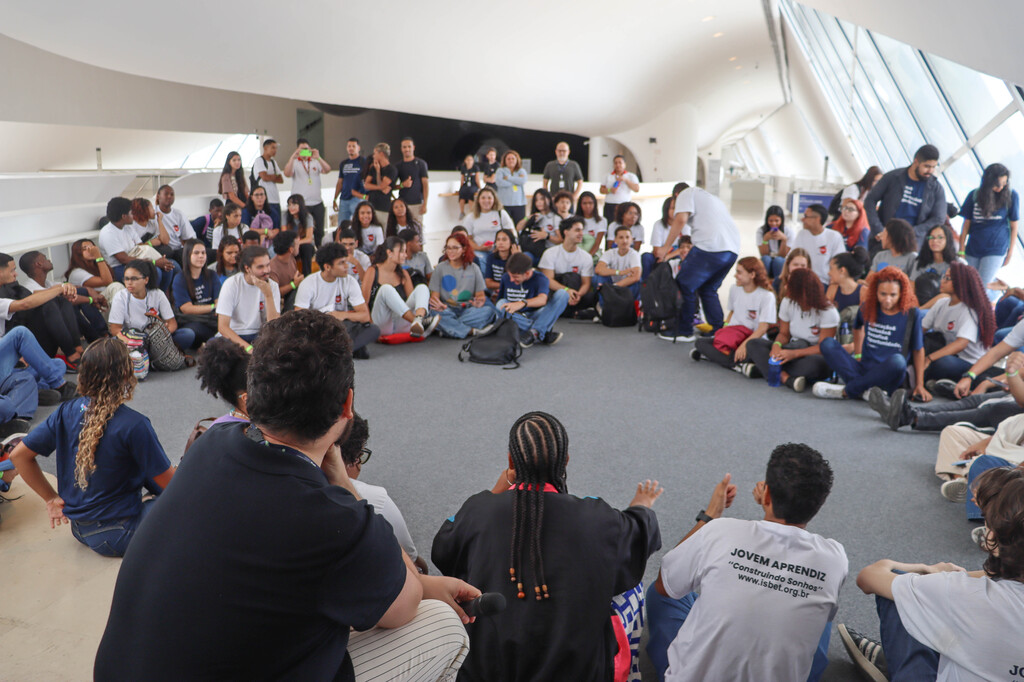

CLIMÃO is an initiative of the Laboratory of Activities of Tomorrow that blends technology and youth culture to speak frankly about the present. Inspired by both the planet's "climate" and the "climate" of relationships and the times we live in, the project creates a space for exchange and reflection where sustainability, behavior, and contemporary issues are discussed in a light, direct, and creative way.
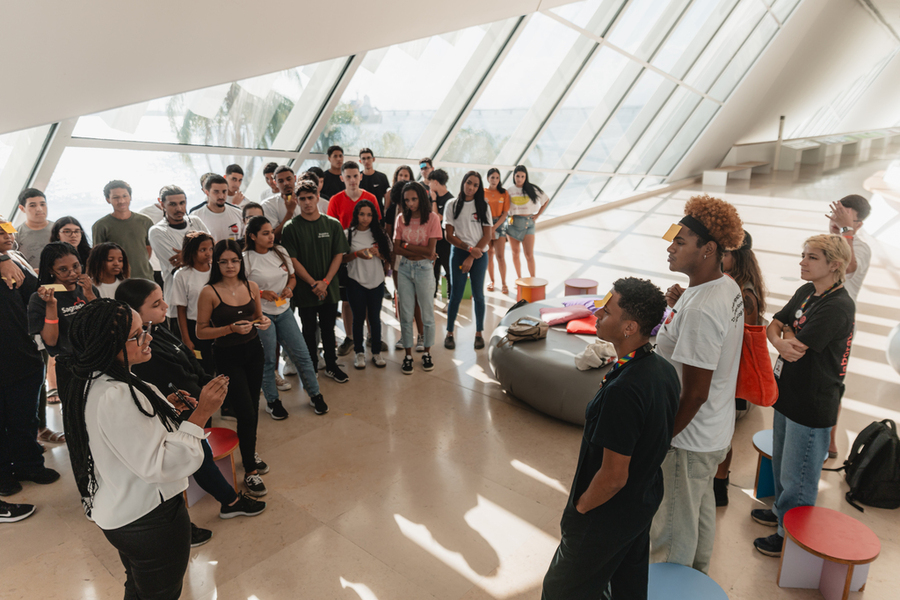
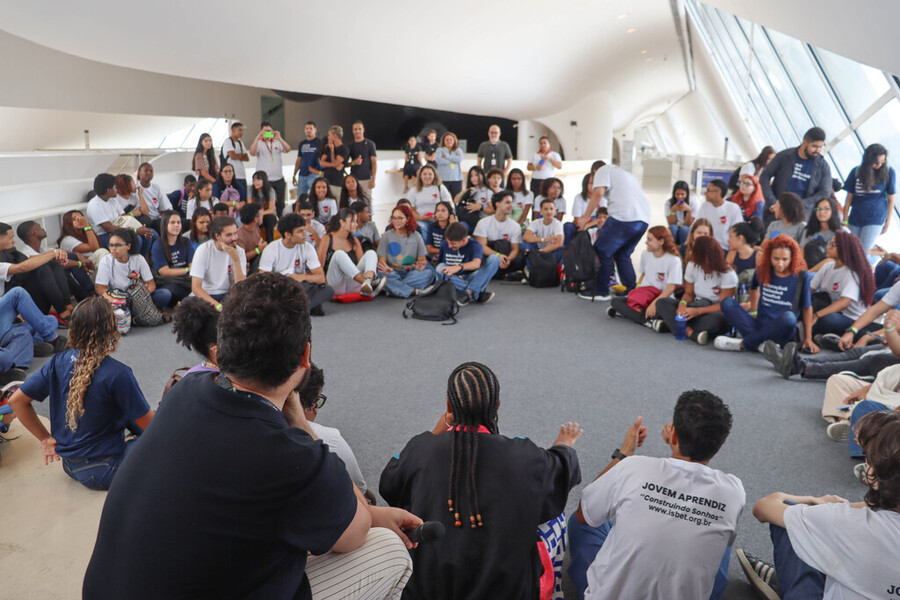
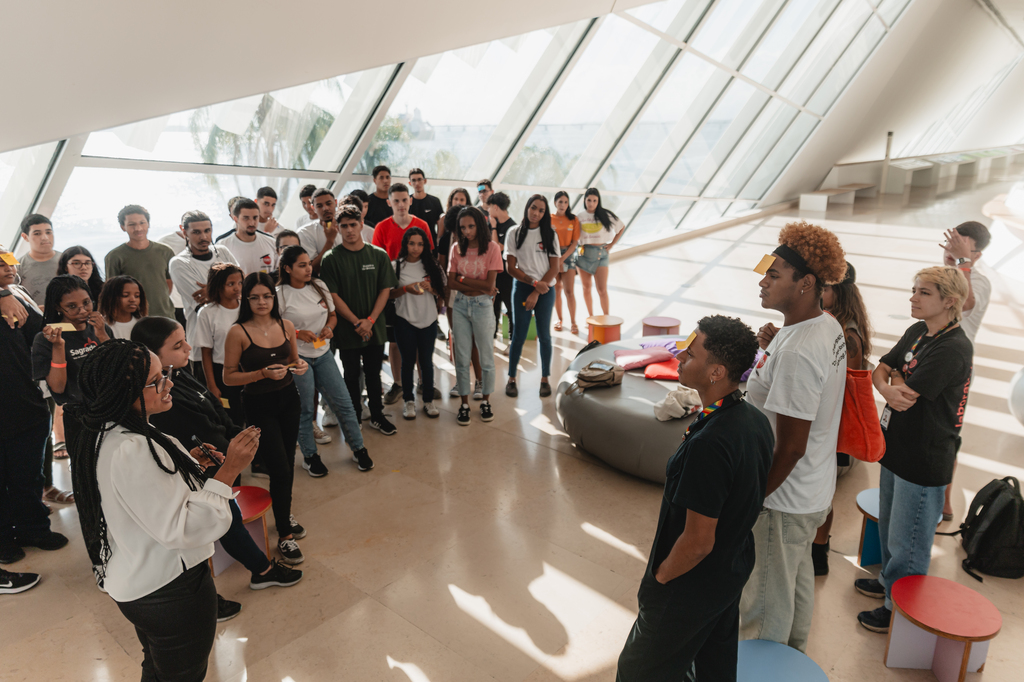
The CLIMÃO discussion groups are straightforward, conversational meetings that bring together different voices and perspectives to consider the impact of our choices — from the environment to social media, from consumption to collective emotions.
All editions of Climão will take place in the Innovation Space, dedicated to experimentation and dialogue. The aim is to inspire young people to reflect on the challenges of the present and act collectively, connecting science, behavior and innovation in an accessible and collaborative environment.
METHODOLOGY
The CLIMÃO methodology is based on the idea of creating an environment of horizontal dialogue.
The dynamic combines active listening, creative mediation, and sensory stimuli, such as music, images, and performances, to spark connections between scientific knowledge and everyday experience. The curation of themes always seeks to reflect the current climatic, social, and behavioral urgencies, transforming data and theories into a lively conversation.
The CLIMÃO project relies on three methodological pillars:
- Affection and presence: creating a safe space for conversation, where sharing is as important as information.
- Accessible language: translating scientific and sociocultural concepts with a young, connected, and creative approach.
- Co-creation: involving the audience in the process, allowing each conversation to be built collectively, with the questions and perceptions that emerge in the moment.
How to participate?
The selection of student and school groups is carried out by the Laboratory's curatorial team. CLIMÃO activities take place on a case-by-case basis throughout the year, and the Laboratory team contacts the pedagogical coordinators and teachers directly to arrange the participation and monitoring of the classes.
REFERENCES
FREIRE, Paulo. Pedagogy of the Oppressed. Rio de Janeiro: Paz e Terra, 1987.
GUATTARI, Félix. The Three Ecologies. Campinas: Papirus, 1990.
LATOUR, Bruno. Where to Land? Rio de Janeiro: Bazar do Tempo, 2020.
SIMAS, Luiz Antonio; RUFINO, Luiz. Fire in the Bush: The Enchanted Science of Macumbas. Rio de Janeiro: Mórula, 2018.
HOOKS, bell. Teaching to Transgress: Education as the Practice of Freedom. São Paulo: WMF Martins Fontes, 2013.
CANCLINI, Néstor García. Hybrid Cultures: Strategies for Entering and Leaving Modernity. São Paulo: EDUSP, 2008.
KULLA, Bárbara; CANEVACCI, Massimo (eds.). Youth and Cities: Essays on Contemporary Urban Culture. São Paulo: Annablume, 2014.
THIOLLENT, Michel. Action Research Methodology. São Paulo: Cortez, 2011.