Video Mapping Workshop as an Archive of Waters with Coletivo Coletores
Edition
Name
Video Mapping Workshop as an Archive of Waters with Coletivo Coletores
Oficina de videomapping como arquivo das águas com Coletivo Coletores
Description
Num mergulho na exposição Oceano — o mundo é um arquipélago, em cartaz no Museu do Amanhã até 19 de maio, convidamos o artista e pesquisador Flávio Camargo para conduzir a oficina que transforma práticas do vídeomapping numa espécie de arquivo material das águas, nos ajudando a construir um olhar atento e artísticos sobre as aguas da Baía de Guanabara.
In an immersion into the exhibition Ocean — The World Is an Archipelago, on display at the Museum of Tomorrow until May 19, we invite artist and researcher Flávio Camargo to lead a workshop that transforms video mapping practices into a kind of material archive of waters, helping us build an attentive and artistic perspective on the waters of Guanabara Bay.
Related Project
Open Laboratory
Text
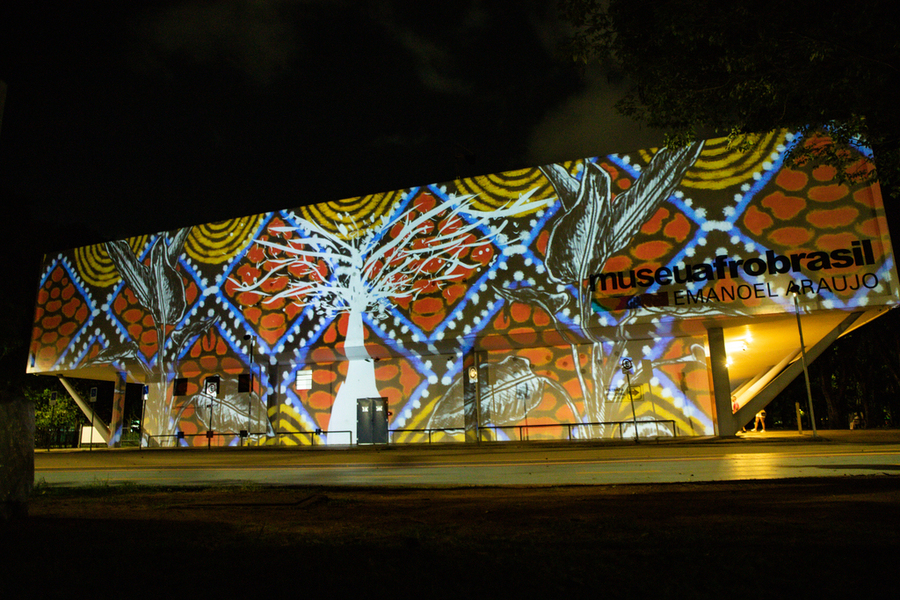
The collective proposes that cities be seen as both medium and support for its actions, using various visual and technological languages to discuss themes such as global peripheries, historical and cultural erasures, and the right to the city. Coletivo Coletores has a history of participation in art, technology, and urban projects and exhibitions in various cultural institutions across Brazil, including the Museu das Favelas, Museu Nacional da República, Museu da Língua Portuguesa, MUBE, FILE SP, Museu Afro Brasil, and Instituto Moreira Salles. Starting from the word “Guanabara,” of Tupi origin (kûárana pará or yguaá-mbara), meaning “bosom of the sea,” in reference to the rounded shape of the bay and the abundance of fishing its waters once provided, the activity proposes a dialogue between memory, territory, and landscape. The activity combines experimentation, projection techniques, and the construction of a visual narrative, bringing together art, technology, and projected image. about the workshop Starting from a process of training and collaborative creation led by Coletivo Coletores, the workshop will take place on May 11 and 12, 2026, from 2:00 p.m. to 6:00 p.m. The focus is to introduce participants to the fundamentals of video mapping, collective creation methodologies, and references from urban visual culture, with an emphasis on water memory, territory, and the city. Across these two sessions, participants will carry out visual experiments and produce original content (photographs, drawings, videos, and graphic designs) inspired by the urban landscape and the city’s water-related narratives. The material will be created using both their own resources and the collective’s archive. On May 11, the focus will be on content development and media conversion, while on May 12 we will concentrate on hands-on experiments using Resolume Arena software. The final stage of the workshop will be dedicated to the public presentation of the collaborative video mapping work. The projection will take place on the architecture of the Museum of Tomorrow, transforming the space into a narrative surface about water flows, memories, and imaginaries, and sharing with the public the creative process developed throughout the training. Note: For the best experience of the practice, participation on both days of the workshop is essential.
O coletivo propõe que as cidades sejam vistas como meio e suporte para suas ações, utilizando diversas linguagens visuais e tecnológicas para debater temas como periferias globais, apagamentos históricos e culturais, e o direito à cidade. O Coletivo Coletores tem um histórico de participação em projetos e exposições de arte, tecnologia e cidades em várias instituições culturais pelo Brasil, incluindo o Museu das Favelas, Museu Nacional da República, Museu da Língua Portuguesa, MUBE, File SP, Museu Afro Brasil e Instituto Moreira Salles. Partindo da palavra “Guanabara”, de origem tupi (kûárana pará ou yguaá-mbara), que significa “seio do mar” em referência ao formato arredondado da enseada e à fartura de pesca que suas águas já proporcionaram, a atividade propõe um diálogo entre memória, território e paisagem. A atividade combina experimentação, técnicas de projeção e a construção de uma narrativa visual, unindo arte, tecnologia e imagem projetada. sobre a oficina Partindo de um processo de formação e criação colaborativa, conduzido pelo Coletivo Coletores, a oficina será organizada nos dias 11 e 12 de maio de 2026, das 14h às 18h. O foco é apresentar aos participantes os fundamentos do vídeo mapping, metodologias de criação coletiva e referências da cultura visual urbana, com ênfase na memória das águas, território e cidade. Nesses dois encontros, os participantes realizam experimentações visuais e geram conteúdo autoral (fotografias, desenhos, vídeos e grafismos) inspirados na paisagem urbana e nas narrativas hídricas da cidade. O material é produzido tanto com recursos próprios quanto com o acervo do coletivo. No dia 11 de maio, será dedicado à elaboração de conteúdo e conversão de mídia, enquanto no dia 12 de maio focaremos em experimentos práticos com o software Resolume Arena. A etapa final da oficina será reservada para exibição pública da obra colaborativa de vídeo mapping. A projeção será feita na arquitetura do Museu do Amanhã, transformando o espaço em uma superfície narrativa sobre fluxos, memórias e imaginários das águas, e compartilhando com o público o processo criativo desenvolvido durante a formação. observação: Para um melhor aproveitamento da prática, é essencial a participação em ambos os dias da oficina.
External Link
https://forms.gle/XyfF9Xkagwj6L8HeA
subEvent
Video mapping as an Archive of Waters: With Coletivo Coletores (2026-05-11T14:00)
thumbnailUrl
https://museu-do-amanha.s3.sa-east-1.amazonaws.com/afa3bc3fed92ccb00beb8d7c95d79c6e.jpeg
Initial Date
2026-04-27
End Date
2026-05-12